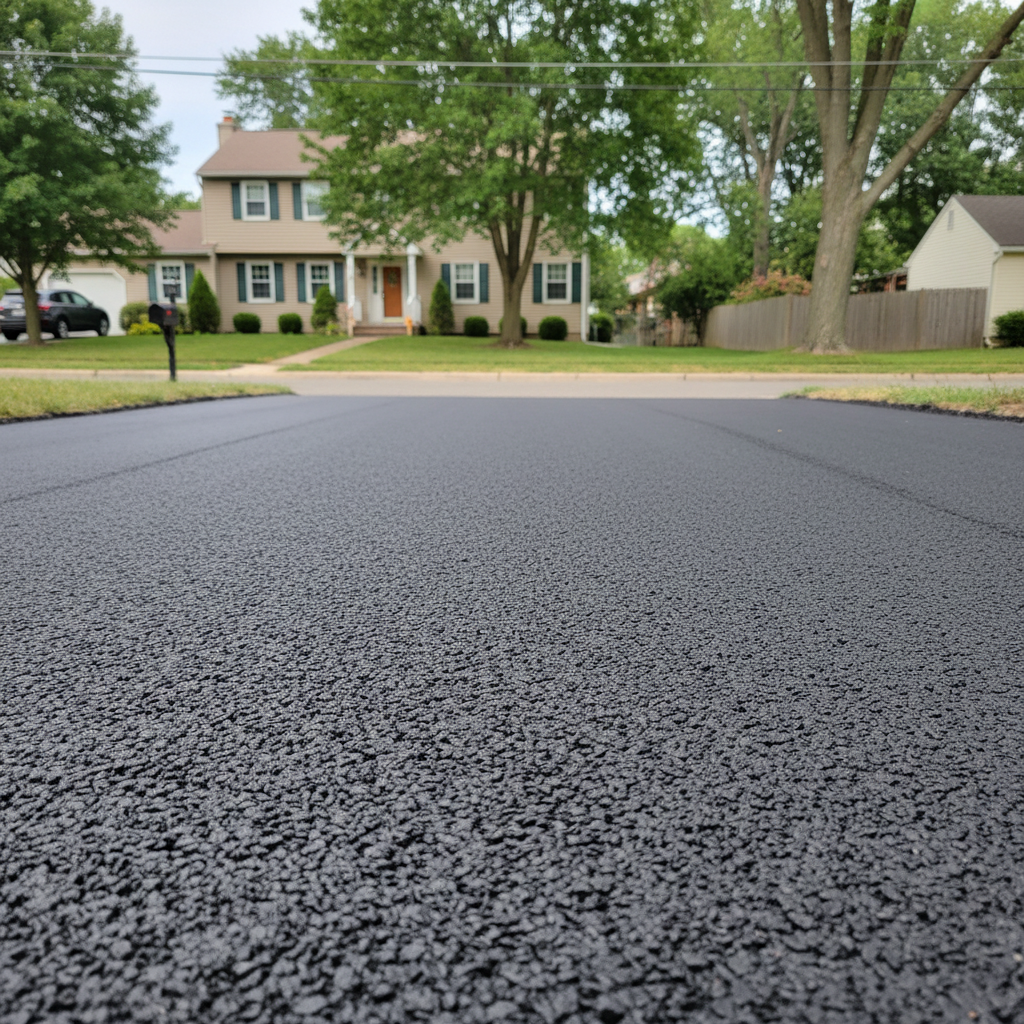
A driveway or a parking lot is one of the bigger checks a homeowner or business owner writes without a lot of research behind it. Most people get three bids, pick the middle number, and hope for the best. That works out fine sometimes. Other times you get a driveway that's heaving and cracking by year three, and the contractor who poured it is nowhere to be found. Asphalt is forgiving to look at and unforgiving in practice. Two driveways can look identical the day they're laid and be completely different jobs underneath.
What the ground in Eastchester is actually doing under there
Westchester County sits on glacial till, which is a mix of clay, sand, and rock left behind by the last ice sheet. It's not uniform. You can dig two test holes ten feet apart on the same lot and hit a boulder in one and soft clay in the other. That matters because asphalt doesn't fail from the top down nearly as often as it fails from the bottom up. If the sub-base under the pavement isn't compacted properly, or if there's a clay pocket holding water right under the stone, you'll see it as cracking and dipping within a couple of winters, not years.
Then there's the freeze-thaw cycle. The Lower Hudson Valley goes through somewhere around 30 to 40 freeze-thaw cycles between November and March. Water gets into any hairline crack, freezes, expands, and widens that crack a little more each time. By March, a crack that started as a thread is a gap you can fit a pencil into. This is why crack sealing before winter, not after, is the thing that actually saves a surface. A contractor who tells you cracks can wait until spring is telling you something, and it isn't good news.
The part you can't see is the part that matters most
A proper residential driveway in this area generally wants 4 to 6 inches of compacted aggregate base, then a 2-inch binder course, then a 1 to 1.5-inch top course, each layer compacted with a roller before the next goes down. Parking lots carrying regular vehicle traffic need more base depth, not less. Ask any contractor bidding your job what their base depth is and what they're compacting it with. If the answer is vague, or if the quote doesn't separate binder and top coat at all, that's worth noticing.
Some of the older streets around Eastchester, areas like Lawrence Park and parts of Cedar Knolls, have driveways that were poured decades ago straight over whatever base happened to be there at the time. If your existing driveway is from that era and nobody's touched the base since, resurfacing over it without milling the old surface first usually just telegraphs the same cracks back up through the new layer within a season or two. Milling it down and starting the base fresh costs more up front. It's also the only way to actually fix a driveway that's failing from below.
Why the lowest number on the page usually isn't the best deal
Three contractors can bid the same driveway and come back with numbers that are hundreds or thousands apart, and the lowest one is often cutting one of three corners: thinner asphalt than the job calls for, no binder course at all, or skipping compaction steps to save a day of labor. None of that shows up when the truck pulls away. It shows up as alligator cracking and standing water the following spring. A driveway laid thin and uncompacted might make it two or three years. One built with proper base and thickness should run 15 to 20 years before it needs resurfacing, with sealcoating every two to three years in between to protect it.
Ask for the asphalt thickness in writing, not just a total price. Ask whether the bid includes milling the existing surface or paving over it. Ask how many trucks of material the job is expected to take, which tells you roughly how much asphalt is actually going down. A contractor who's done this work for years will answer these without blinking. One who hasn't will try to steer the conversation back to price.
Permits, insurance, and the stuff that protects you if something goes wrong
Resurfacing or sealcoating an existing driveway usually doesn't need a permit in most Westchester towns. Expanding a driveway's footprint, adding a new apron, or cutting into the curb at the street typically does, and that permit usually runs through the town or village highway department rather than the county. If your job touches the curb cut or the road right-of-way at all, ask the contractor who's pulling that permit, because it should not be you finding this out after the work is done.
Confirm the contractor carries liability insurance and workers' compensation, and ask to see a certificate rather than taking their word for it. If a worker gets hurt on your property and the contractor isn't covered, that liability can land on you as the homeowner. This is a five-minute phone call to their insurance agent to confirm, and any legitimate contractor expects the question.
Timing the job around the weather here
Asphalt plants in this region generally shut down or slow way down from December through March because hot-mix asphalt needs to be laid when ground and air temperatures are high enough for it to compact properly, typically above 50 degrees. That gives most of us a paving season running roughly April through November. If a contractor is offering to pave your driveway in January at a discount, be skeptical about where that material is coming from and how it'll perform.
Once the top course is down, plan on staying off it with vehicles for at least 24 to 48 hours, and avoid parking in the same spot every day for the first month while it's still curing fully in the summer heat. Sealcoating needs a similar window, dry weather and temperatures holding above 50 degrees for the coating to cure instead of staying tacky.
None of this is complicated once you know what to ask. Get the base depth and thickness in writing, ask about milling if the old surface is already cracked, confirm insurance, and find out who's handling any permit the job needs. We go through all of this with homeowners before a shovel goes in the ground, and if you want a second opinion on a bid you've already got, Ironclad Paving Company is happy to walk through it with you.